Finance & operations
From quote to invoice and purchasing in one financial view
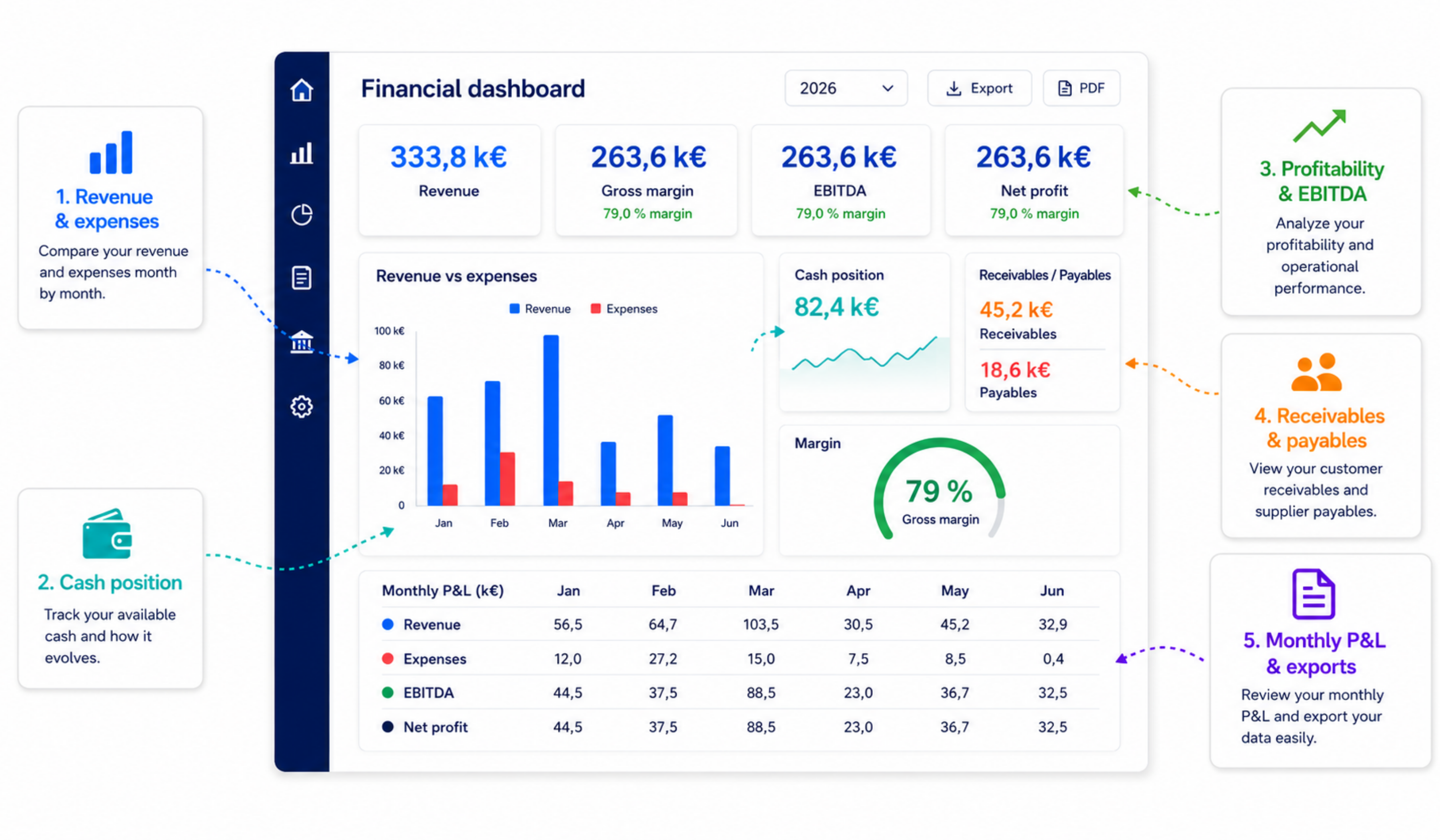
Manage quotes, invoices, payments and purchasing in one connected workflow. Gain faster insight into cash flow, outstanding amounts and operational performance without relying on scattered tools or spreadsheets.
- Financial overview in one dashboard
- From quote to paid invoice
- Faster payment and customer follow-up
- Better control over purchasing and supply
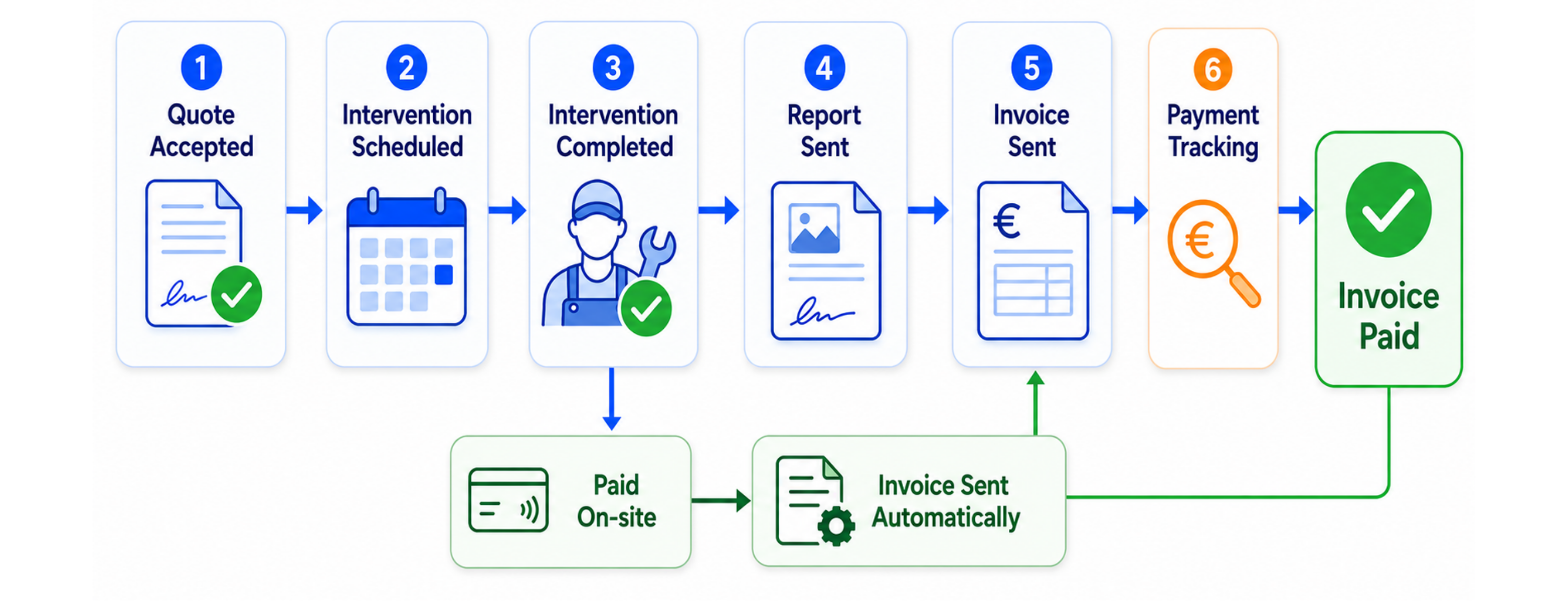
From quote to payment
One streamlined flow from approval to paid invoice
Once a quote is approved, the rest of the process continues in the same workflow. Planning, execution, reporting and invoicing stay connected, helping your team work faster and avoid gaps between steps.
- Quote, planning and intervention in one flow
- Work report linked directly to the job
- Invoice prepared automatically after execution
- Easier payment follow-up with less admin work
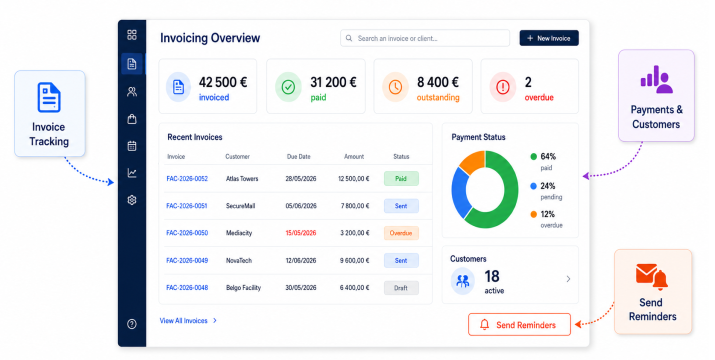
Invoicing overview
All invoices and payment statuses in one clear overview
See immediately which invoices are paid, which remain open and where follow-up is needed. Your team works faster with one central view of customers, payments and reminders.
- Instant view of paid, open and overdue invoices
- Clear overview of invoices and customer payments
- Faster reminder sending
- Less manual admin follow-up
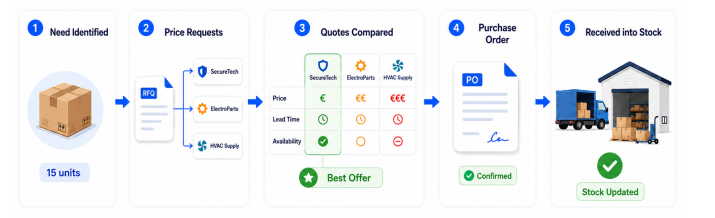
Purchasing & supply
Order faster, with price and lead time in view
Structure the purchasing process from quote requests to receipt. Compare suppliers, choose the best offer and keep tighter control over supply and replenishment.
- Purchasing needs tracked centrally
- Supplier quotes compared clearly
- Faster purchasing decisions
- Receipt and stock update in the same flow
Invoicing straight from the work order
On time-and-material work the margin is not in the hourly rate but in what never gets invoiced: the half hours, the extra material, the second trip. Anything recorded on the work order that never reaches an invoice is work you did for free.
The costing is the work order
Hours, materials and travel are captured on the job itself rather than reconstructed afterwards. The invoice follows directly from that, with the work order as evidence when the customer asks.
What falls inside a contract and what falls outside stays separate, so additional work is charged without an argument about what was included.
Time and material, fixed price or stage payments
Not every job is billed the same way. An emergency call-out goes on time and material, an installation on a fixed price, a larger project in stages. All three draw on the same recorded hours and parts.
On a fixed price, estimated against actual stays visible — the only moment you learn whether your pricing held.
Purchasing on the other side
Parts ordered for a customer stay linked to the job they were bought for, so a supplier invoice can be traced back to the work that justified it.
Who this matters to
- Installers working both on time-and-material and on fixed price
- Businesses whose invoicing currently waits on last week's paperwork
- Companies subject to Belgian structured e-invoicing requirements
Frequently asked questions about invoicing
Is Peppol e-invoicing supported?
Structured electronic invoicing between businesses has been mandatory in Belgium since 1 January 2026. Invoices are produced in structured form so they can travel over the Peppol network and be read automatically by the recipient's accounting.
Can one job be partly contract and partly billable?
Yes. What the contract covers is not charged; what falls outside it appears separately on the invoice, with the work order as evidence.
Can we see whether a project was profitable?
Yes. Estimated and actual hours and materials sit side by side per project, so the gap is visible before you write the next quotation.
Bring your service operations together in one system
Discover how Service Suite fits your team, workflow and growth plans.